The Italian-born English Virtouso, Muzio Clementi (1752 – 1832), who was four years Mozart’s senior, was not too well known on the continent but after his first tour in 1780, his reputation swept over Europe. Emperor Joseph II arranged for competitions between the greatest Austrian pianists and the greatest pianists outside of Austria. The great... Continue Reading →
The Grumpy Pianist
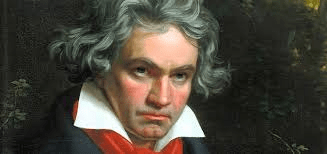
Ludwig van Beethoven (1770 – 1827) can be considered as the first Romantic Pianist (1770 – 1850), and he broke all the rules in the name of expression. In the nineteenth century the word ‘expression’ was the replacement of the eighteenth century word ‘taste’. He thought of music orchestrally and achieved the effect of orchestra... Continue Reading →
The Child Prodigy

At three, Wolfgang Amadeus Mozart (1756 – 1791) was picking on the harpsichord, carefully selecting the thirds and other consonances. This amused him endlessly. At four, he was studying a little minuets; at five he was composing and had perfect pitch where he could spot a quarter tone out of tune on the trumpet that... Continue Reading →
The Development of the Harpsichord Tradition
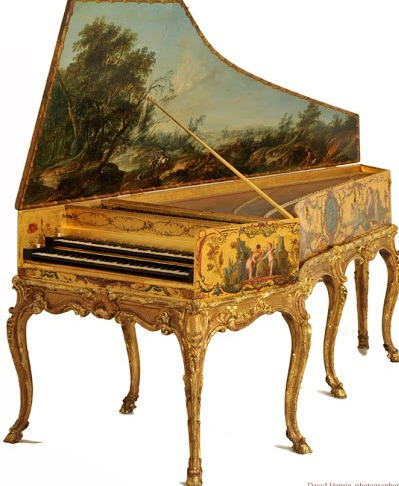
François Couperin (1668 – 1733) Louis Couperin had an interest in and a command of the contrapuntal keyboard technique and the conservative use of ornamentation and chord selection. Generally, only especially long note values received ornaments to sustain the sound. He favoured and manifested the use of major and minor tonalities. In his Sarabande, he... Continue Reading →
The Development of Piano
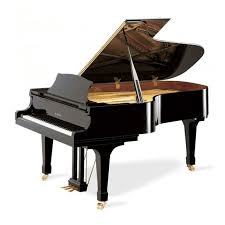
The Harpsichord had sparkling clarity but it lacked expressive power. Keyboard manufacturers had pathed a way to make the instrument more capable of greater nuances. In 1709, Bartolomeo Cristofori, the Florentine instrument maker, began to manufacture realised the pianoforte – a harpsichord with hammers. The Italian gave his instrument the shape of large harpsichord called... Continue Reading →
Italian Cembalo (Harpsichord) Music
Domenica Scarlatti (1685 – 1757) pathed a way for the future school of piano composition. A Neapolitan composer, his harpsichord work was largely composed in Madrid or other Spanish cities. He lived in Spain under the patronage of Queen Mariá Bárbara. He composed more than five hundred of pieces in Spain for the Harpsichord. He... Continue Reading →
Early Keyboard Instruments
Early Keyboard Instruments Echiqüier, Clavichord, Harpsichord and Piano are each stringed keyboard instrument with various shape and sizes each having their own merits, strengths and weaknesses. Echiqüier In French, Echiqüier means chessboard. In England, it was called a Checker. Echiqüier performers were in demand in their hey day and were well rewarded for their services.... Continue Reading →
Baroque Phrasing
Phrasing In Baroque music, it is important to have separation between phrases so it is audible to the listener. This can be achieved either by a moment of silence before playing the next note or by making an ostensible silence as a stolen time. As always, line comes first, but punctuation is itself an element... Continue Reading →
Baroque Rhythms
Certain specific conventional rhythmic alteration took shape within an old and general traditional rhythmic flexibility. Baroque performers were expected to improve the expressiveness of music while adopting to their own personal taste. Before and during the Baroque period, general liberty to modify rhythm were mainly related to pairing notes into units of a beat. This... Continue Reading →
Dotting in the Baroque Era
Dotting The dot in Baroque music lengthens the durations of the note after it is placed by a variable amount. The variable duration of the dot depends on the rhythmic freedom practiced by the baroque composer at all time and places. Sometimes dots are placed after the notes which augments the note value, but in... Continue Reading →
 Kim Chang's Piano Studio